By Richy Shofield, Founder & CEO of Shofield AI
Most businesses do not need another software subscription. They need the work to actually get done. For years, companies were told to buy more SaaS: another CRM, another dashboard, another booking tool, another marketing platform, another customer service system.
But the result is often the same. Leads still wait. Follow-up still depends on memory. Missed calls still disappear. Customers still ask the same questions.
Founders still check everything manually. Teams still waste hours moving information between tools.
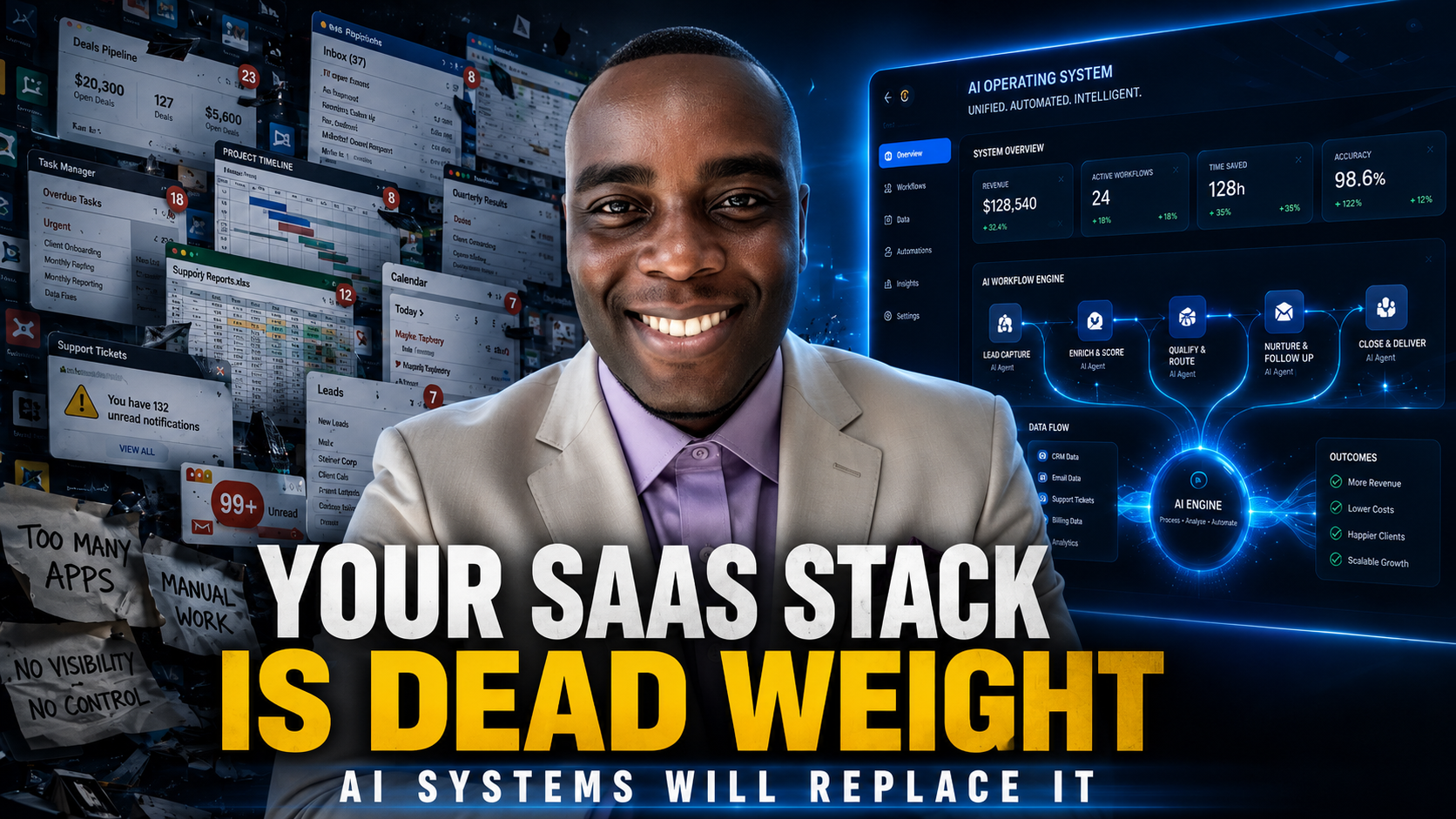
That is why Palantir’s recent claim that “SaaS is dead” matters. The point is not that software disappears tomorrow. The point is that the old software model is no longer enough. A login does not fix a broken workflow. A CRM does not guarantee follow-up. A dashboard does not recover missed revenue.
A chatbot does not create an operating system.
The next advantage belongs to businesses that stop buying disconnected tools and start building AI systems around how their company actually works.
The Real Problem Is the Handling Layer

Most service businesses do not lose revenue only because they lack leads. They lose revenue after interest is shown. A prospect fills in a form. Nobody replies fast enough. A WhatsApp message is missed. A call is not returned.
A proposal is sent once and forgotten. A no-show is never recovered. A customer question blocks the team again. That is the handling layer.
And in many companies, that layer is still too manual, too slow, and too inconsistent. This is where AI becomes commercially useful: Not as a toy. Not as a generic chatbot. Not as “AI content.” But as a system that responds, qualifies, follows up, books, routes, updates, reports, and escalates.
The Future Is Not More SaaS. It Is AI-Operated Workflows.
Microsoft’s Satya Nadella has already warned that traditional business applications may collapse in the agentic AI era because agents can take over the business logic that used to sit inside separate apps. Palantir is already building in that direction. Its AI FDE can translate natural language into operational actions, use tools, manage context, respect permissions, and work through closed-loop workflows.
Anthropic is moving the same way. In May 2026, Anthropic released ready-to-run financial services agent templates for work such as pitchbooks, KYC screening, and month-end close, designed to get teams using Claude on real work in days rather than months.
Salesforce is also betting heavily on this shift. Marc Benioff said AI agents have brought major efficiency gains across Salesforce, including service, support, distribution, and marketing. The message is clear: AI is moving from answering questions to executing work.
But AI Without Governance Is Dangerous

This is also where many businesses will fail. They will add AI too quickly, without context, rules, escalation paths, or quality control. Recent research reported by ITPro found that many companies have rolled back customer-service AI agents because of governance failures, including data exposure, hallucinations, brand risk, and lack of auditability.
That is why the answer is not “just add an AI agent.” The answer is managed AI implementation. AI needs business context, approved answers, access rules, human escalation, dashboard and ongoing management. Otherwise, it becomes risk disguised as innovation.
What Shofield AI Builds
At Shofield AI, we help small and mid-sized service businesses implement and manage AI systems in their daily operations. We do not start by forcing every client into one tool. We start by identifying the workflow that is leaking time, revenue, or customer trust. Then we design the right AI Employee system around that problem.
That can include: AI Employees that respond to inquiries, qualify prospects, follow up, book appointments, support customers, update workflows and report what is stuck. Behind each serious AI Employee is a Client Brain: the company’s offer, FAQs, tone, rules, qualification logic, escalation paths, workflows, and approved answers. That is the difference between a generic chatbot and a business system.
The New Standard for Service Businesses
The question is no longer: “Which software should we buy?” The better question is: “Which workflow is leaking money, time, or customer trust — and what AI system should we build around it first?”
Start there: One leak. One workflow. One AI Employee. One measurable improvement. Then expand, because the businesses that win will not be the ones with the most software. They will be the ones with the clearest systems for faster response. Cleaner follow-up. Better booking. Stronger customer handling. Less manual dependency. More visibility. More control. That is where business is going.
And if your company is still depending on humans to remember every lead, every reply, every follow-up, every booking, every customer question, and every manual update, your business is already exposed. The old SaaS mindset is dying. The AI systems era has started.
If you want to know where your business is leaking time, revenue, or customer speed, request an AI Systems Assessment from Shofield AI. (www.shofield.ai)
We will identify the highest-value workflow to fix first and show you which AI Employee your business should build.