

The biggest AI shift this week was not a model launch. It was the growing gap between businesses that execute instantly and those that still operate manually.
1. What Changed This Week
Most AI headlines this week focused on product announcements, model improvements, and infrastructure investments. Microsoft continued expanding AI agents inside business workflows, Apple pushed forward with its AI strategy, and major AI labs kept investing heavily in the infrastructure needed to support the next generation of AI systems.

Those developments matter, but they are not the story most business owners should focus on.
The more important shift is that AI is moving from being a productivity tool to becoming part of business operations. The conversation is no longer about generating content faster or answering questions more intelligently. It is increasingly about execution.
Businesses are beginning to use AI to respond to leads, qualify prospects, schedule appointments, manage customer communication, coordinate internal workflows, and recover opportunities that would previously have been lost.
That changes the competitive landscape.
A prospect who submits an inquiry today often contacts multiple providers. The business that responds first, follows up consistently, and removes friction from the buying process increasingly has the advantage. AI is making that level of execution available to companies that previously lacked the staff or resources to operate at that speed.
The companies gaining the most value from AI are not necessarily the most technical. They are the ones redesigning their operations around responsiveness and consistency.
2. Where AI Creates Winners and Losers
The biggest winners over the next few years may be ordinary service businesses.
Consider two real estate agencies receiving the same number of inquiries. One responds several hours later after an agent becomes available. The other responds immediately, qualifies the prospect, answers common questions, schedules a viewing, and continues following up automatically until a conversation happens.
The difference is not marketing. The difference is execution.
The same pattern is emerging across legal services, healthcare, recruitment, financial services, consulting, agencies, and local service businesses. Customers increasingly expect immediate engagement, and businesses that deliver it are creating a meaningful competitive advantage.
The businesses most exposed are often not the ones avoiding AI entirely. They are the ones still operating through manual processes, inconsistent follow-up, and founder dependency. Many assume they have a lead-generation problem when the real issue is that opportunities are leaking out of the pipeline after the lead arrives.
As AI becomes more integrated into daily operations, the gap between fast businesses and slow businesses is likely to widen.
3. What Business Leaders Should Do Now
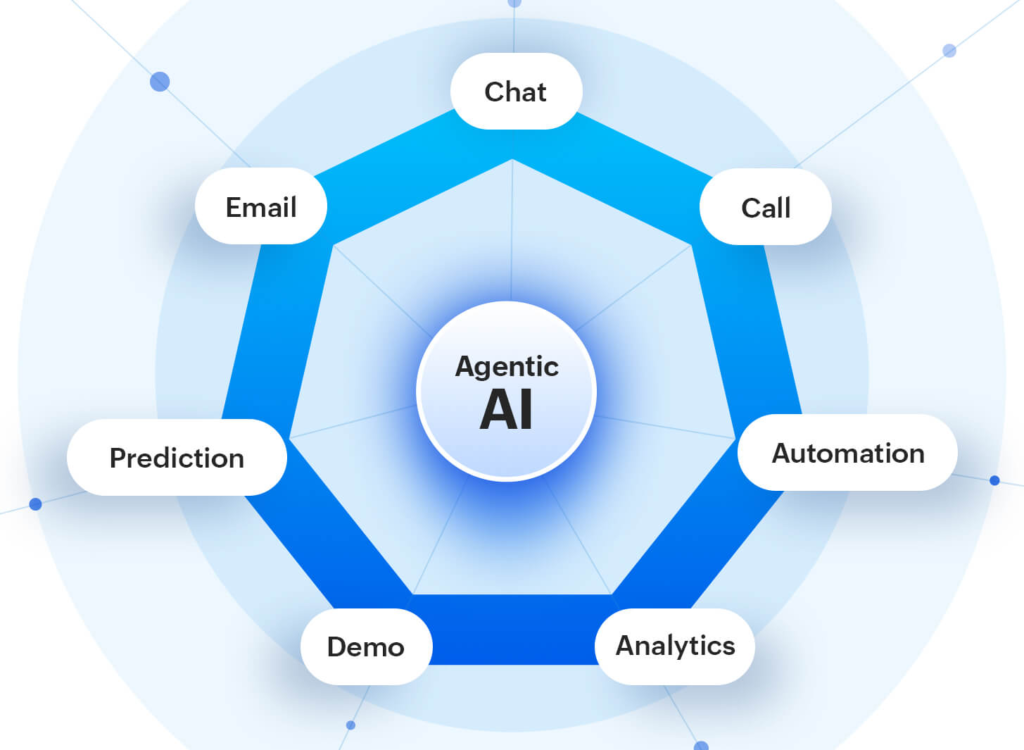
Most companies do not need another AI tool. They need to identify where revenue is being lost.
Start by measuring speed-to-lead. If inquiries wait hours before receiving a response, there is a strong chance opportunities are being lost. Track first-response time, customer response time, and response coverage across business hours and after-hours periods.
Next, examine follow-up discipline. Many businesses spend heavily on marketing while failing to measure follow-up completion rates, booked meeting rates, no-show recovery rates, and pipeline velocity. These metrics often reveal more about growth potential than lead volume itself.
Look closely at repetitive customer communication. Lead qualification, appointment reminders, customer updates, reactivation campaigns, and routine inquiries are often areas where intelligent automation can improve consistency while reducing operational workload.
Finally, identify areas where the business depends too heavily on the founder. If sales activity, customer communication, approvals, and operational decisions all flow through one person, scalability eventually becomes difficult.
The goal is not replacing people. The goal is removing friction, delays, and inconsistency.
4. My Operator View From Shofield AI
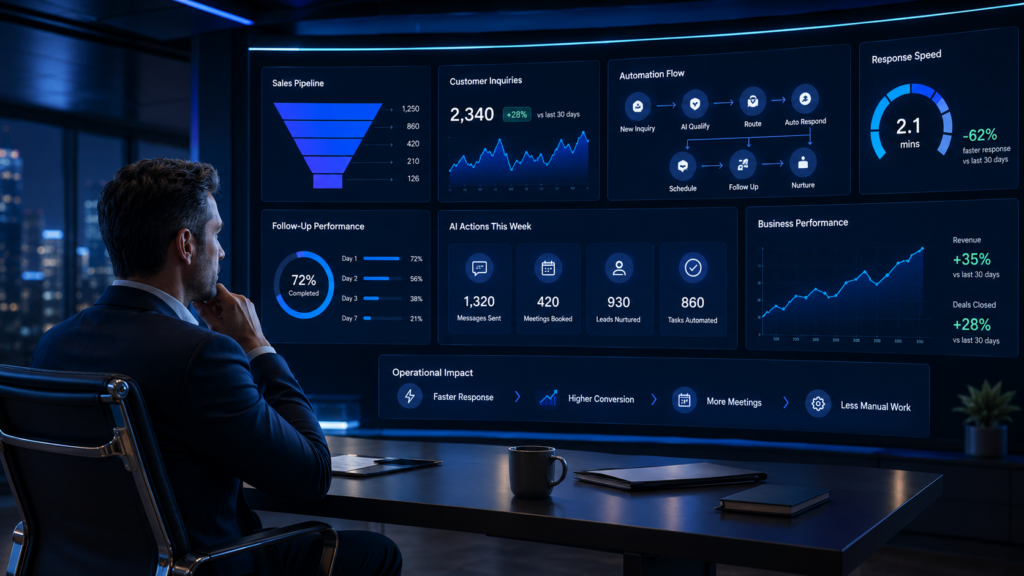
One of the biggest mistakes I see is businesses treating AI as a technology project rather than an operational improvement project.
A new AI tool will not fix missed calls. It will not solve inconsistent follow-up. It will not remove founder bottlenecks. Those are operational problems that require operational solutions.
At Shofield AI, we start with the business problem first. We identify where leads are being missed, where communication breaks down, where customers experience delays, and where manual processes are slowing growth. Only then do we design and deploy the appropriate AI Employees, workflows, automations, and systems.
The businesses creating the most value from AI today are not chasing every new model release. They are quietly building faster response systems, better follow-up processes, stronger customer experiences, and more scalable operations.
That matters because customers are increasingly rewarding businesses that are easier to do business with.
Speed compounds. Systems scale. Manual operations become expensive when customers expect instant execution.
If your business receives leads, calls, emails, forms, or customer inquiries and still depends on manual response, inconsistent follow-up, or founder memory, this is the moment to fix it. Explore Shofield AI at www.shofield.ai and see how AI Employees can help your business respond, qualify, follow up, book, and keep opportunities moving 24/7.