
The Next Business Crisis Will Be Caused by Teams That Refuse to Automate
The latest AI layoff stories are not just about jobs. They are a warning about how companies will be rebuilt.
Block, Amazon, Oracle, Salesforce, Nike, Snap, Meta, Disney, Freshworks — the names are too big to ignore now.
The Signal This Week
The AI layoff story is no longer theoretical. It is no longer a prediction from consultants, futurists, or people trying to make noise online. It is showing up in real company decisions, real headcount reductions, and real operating model changes.
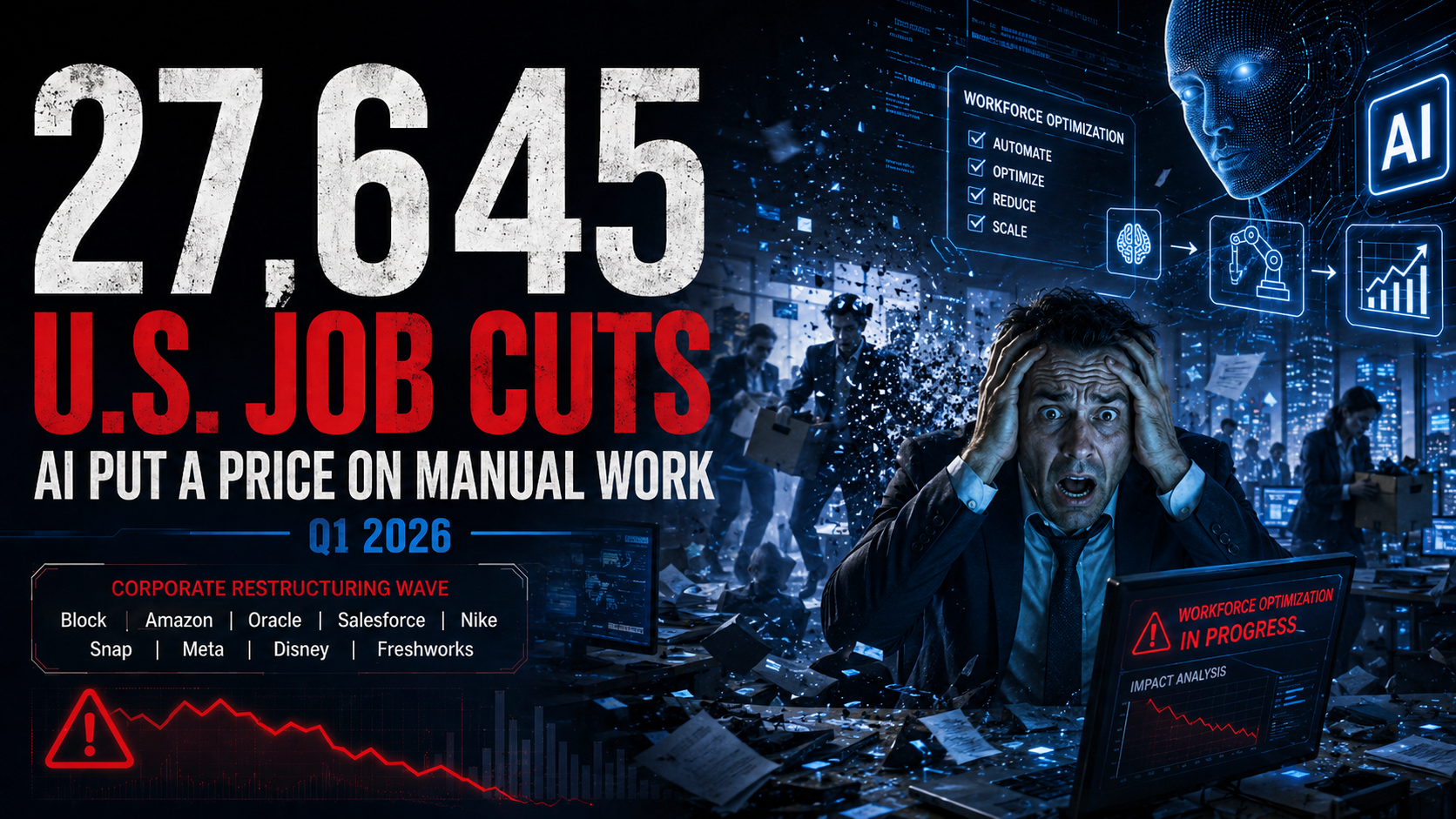
In Q1 2026 alone, U.S. employers cited AI for 27,645 job cuts. In March, AI became the leading stated reason for U.S. job cuts. That number matters because it shows something deeper than layoffs. It shows that AI is now entering the cost structure of companies. And once AI enters the cost structure, every manual process becomes a question mark.
The Numbers Behind the Warning
The company names are no longer small.
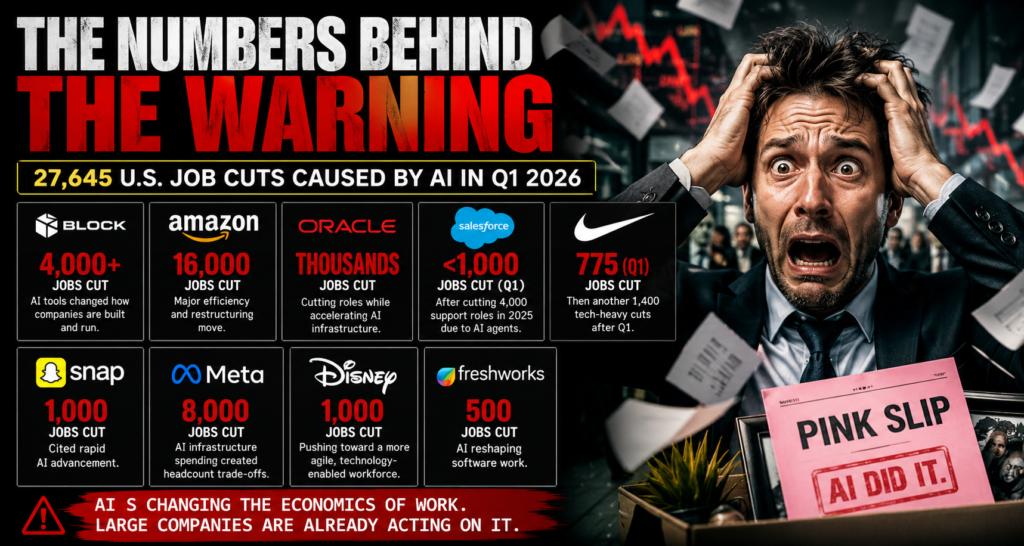
In the first quarter and the immediate wave around it:
- Block cut more than 4,000 roles after Jack Dorsey said intelligence tools changed how companies are built and run.
- Amazon cut 16,000 roles in a major efficiency and restructuring move.
- Oracle began cutting thousands of roles while accelerating its AI infrastructure push.
- Salesforce cut fewer than 1,000 roles in Q1, after already reducing thousands of support roles as AI agents changed support staffing needs.
- Nike cut about 775 jobs earlier in the year, then announced another 1,400 technology-heavy cuts shortly after Q1.
- Snap cut about 1,000 roles shortly after Q1 and directly cited rapid AI advancement.
- Meta moved toward cutting roughly 8,000 roles as AI infrastructure spending created headcount trade-offs.
- Disney began cutting about 1,000 roles as it pushed toward a more agile, technology-enabled workforce.
- Freshworks announced about 500 cuts in May as AI reshaped software work.
Not every one of these cuts was purely caused by AI. That is not the point. The point is more dangerous: AI is changing the economics of work, and large companies are already acting on it.
The Story Most Business Leaders Should Pay Attention To
Imagine a recruitment agency owner in London. A serious client inquiry comes in after hours. The company needs candidates quickly. The budget is real. The timing is urgent. But the agency’s team is offline. The inquiry sits overnight. The next morning, someone replies. Then the client asks a question. Then the follow-up depends on whether someone remembers. Meanwhile, a faster competitor replies instantly, qualifies the need, answers the basic questions, and books the first conversation before breakfast.
The owner later says: “Our lead quality is getting worse.” No. The lead was fine. The handling was weak. That is the uncomfortable truth AI is exposing across the entire market.
The Operator Translation
The lazy interpretation is: “AI is firing people.”The serious interpretation is: “AI is forcing companies to redesign work.” That is a much bigger shift.
The old company model was built around headcount:
- more inquiries meant more staff
- more support meant more agents
- more follow-up meant more assistants
- more content meant more marketers
- more admin meant more coordinators
The new model is different:
- more inquiries mean better AI response systems
- more support means AI triage and routing
- more follow-up means automated sequences
- more booking means AI qualification and scheduling
- more pipeline means AI-assisted CRM discipline
That is why this matters for B2B service businesses. You do not need to be Block, Amazon, Oracle, Salesforce, Nike, Snap, Meta, Disney, Freshworks, or Microsoft to feel this shift. If your business depends on response speed, qualification, booking, follow-up, and customer communication, AI is already changing the standard your prospects compare you against.
The Business Risk
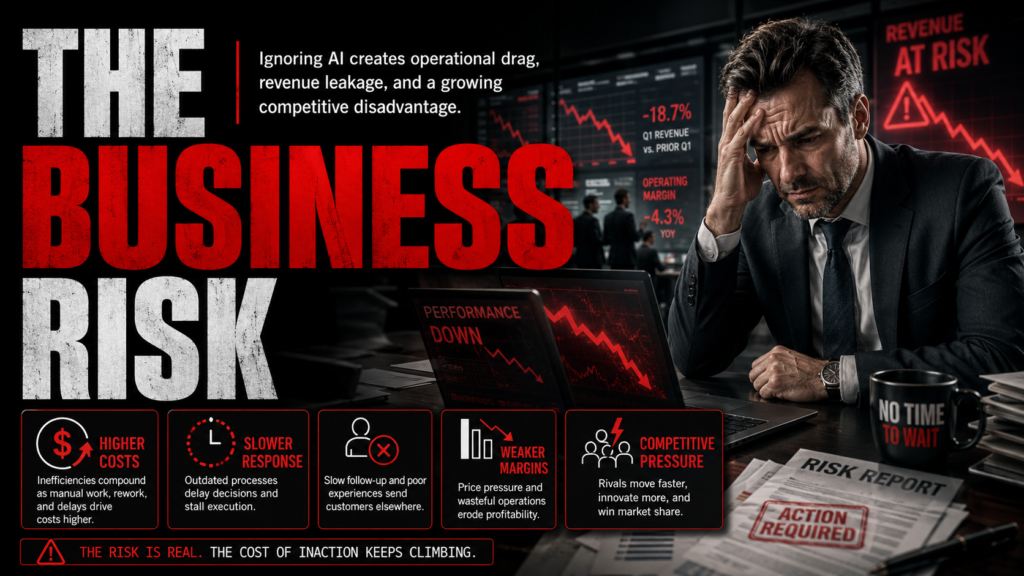
The danger is measurable:
- slower response times while competitors reply instantly
- missed calls that never become recovered opportunities
- weak follow-up after the first message
- qualified leads being treated the same as low-fit inquiries
- lower booking rates because scheduling takes too many steps
- founders becoming the human bottleneck for every serious opportunity
- teams needing more staff just to maintain average service
The cost is not only payroll. The cost is lost speed, lost consistency, lost trust, and lost pipeline. Manual work is not automatically bad. But manual work that is repetitive, slow, inconsistent, and revenue-critical is becoming a liability.
My Take
- The biggest advantage will not come from “using AI.” It will come from redesigning operations around AI execution.
- Companies will not remove people only because AI exists. They will remove people when workflows are too repetitive, too slow, or too poorly structured to justify human-first execution.
- B2B service businesses that already receive inquiries have the clearest opportunity: fix the handling layer before spending more on demand.
- The next wave of AI adoption will be less about content generation and more about communication, qualification, booking, follow-up, and workflow control.
- The uncomfortable truth: if your team still needs humans for every first response, every follow-up, and every booking step, your operating model is already outdated.
Prediction → How to Test → Next-Week Check-In
Prediction:
The next serious AI adoption wave will move from productivity tools into front-end revenue operations: sales, marketing, customer service, booking, follow-up, and customer communication.
How to test it:
Audit one full week of inbound activity.
Track:
- how fast leads receive a meaningful response
- how many missed calls are recovered
- how many leads receive follow-up after no reply
- how many inquiries become booked conversations
- how many opportunities depend on the founder or one key team member
Next-week check-in:
I’ll be watching whether more companies openly connect workforce changes to AI-enabled operating models — not just vague efficiency language.
KPI Lens
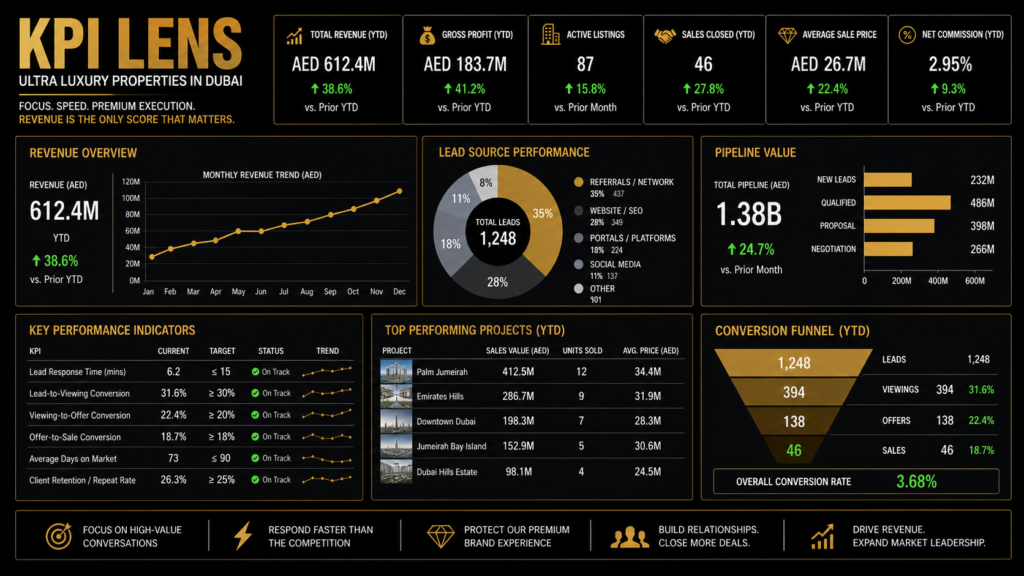
These are the numbers B2B service business leaders should watch now:
- speed-to-lead
- lead response coverage
- missed-call recovery rate
- lead qualification rate
- booked meeting rate
- follow-up completion rate
- no-show recovery rate
- customer response time
- pipeline velocity
- founder dependency
These KPIs matter because AI does not create value in theory.
It creates value when delays shrink, follow-up improves, qualified conversations increase, and the business becomes less dependent on human availability.
What to Do This Week
- Audit every inbound channel: phone, website chat, email, forms, WhatsApp, LinkedIn, and referrals.
- Measure how long it takes for a new inquiry to receive a meaningful response.
- Identify which follow-ups are manual, inconsistent, or dependent on one person.
- Separate high-intent inquiries from low-fit inquiries with a clear qualification flow.
- Automate first response, missed-call recovery, booking, reminders, and no-reply follow-up.
- Build a simple dashboard for response time, booked conversations, missed opportunities, and follow-up completion.
- Stop treating AI as a side experiment and start treating it as operating infrastructure.
Why This Makes Operational AI Urgent
The biggest companies are showing the direction of travel. Block, Amazon, Oracle, Salesforce, Nike, Snap, Meta, Disney, Freshworks, and Microsoft are not all making identical moves. But they are operating inside the same new reality: AI changes the economics of work. That matters for every B2B service business.
Because your prospect does not care whether your team was busy. They care whether someone responded. They care whether the next step was clear. They care whether your business felt organized, serious, and reliable.
Shofield AI helps B2B service businesses deploy 24/7 AI Employees across phone, chat, and email.
These AI Employees help:
- respond to leads
- qualify inquiries
- book appointments
- follow up consistently
- recover missed opportunities
- manage no-show recovery
- route opportunities
- support reviews
- automate workflows
- keep the pipeline moving when humans are unavailable
This is not about replacing the value of good people. It is about removing the repetitive gaps that make good businesses slower than they should be.
I’m Richy Shofield, Founder & CEO of Shofield AI (www.shofield.ai) — and I care deeply that business leaders pay attention to what’s coming, because preparedness will decide who wins this decade.
The Richy Doctrine
Speed compounds. Systems scale. Manual operations become expensive when customers expect instant execution.
Final Move
If your business still depends on manual response, inconsistent follow-up, and human availability to move every lead forward, the market is already telling you what happens next.
Try the free demo at www.shofield.ai and see what AI Employees can do across phone, chat, email, qualification, booking, follow-up, and workflow automation.
Richy Shofield — Founder & CEO, Shofield AI